


Hello, everyone,
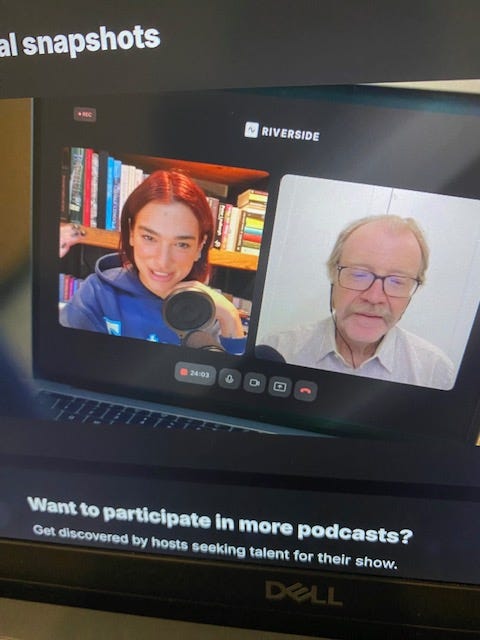
First, I want to share with you the happy news that Lincoln in the Bardo is featured as Dua Lipa’s Monthly Read this month. There’s a number of things you might be interested in: my talk with Dua about the book, a short film on how to read it (if you struggled), a new essay on how the book was written.
Many thanks to Dua (who, as you’ll see, is a pre-naturally perceptive and intelligent force of nature, as well as, of course, a brilliant songwriter and performer) and to her team at Service95, who were wonderful to work with at every step of the way.
It’s been interesting over the years to get the chance to meet people who are extraordinarily gifted in other areas and find that so many of them, like Dua, are great, talented readers - curious about the world, with that insatiable desire to find out more about it, that reading so perfectly addresses.
Thank you, Dua, and what a pleasure it was to meet you and spend a little time together talking. What a mind!
And now for our question of the week:
Q.
Dear George,
First off, a huge heartfelt thanks for Story Club. I've learnt more from you (and your merry band of followers) in a couple of years, than from a lifetime of... everyone else.
But thanks also, for the kindness. For sharing your stance on the world. (Just yesterday, I beeped a Learner Driver and immediately thought, "Would George have beeped him? Probably not. Well... certainly not twice. Note to self: Be more George.")
My question is a follow-on from the marvelous discussion of your story, Love Letter', between David Sedaris and Deborah Treisman in the recent New Yorker Fiction podcast. Sedaris rightly calls it a masterpiece. I was struck deeply - both now and when it first appeared - by the story's emotional heft and its ability to engage politically with our turbulent, polarised times. Treisman remarked on the difficulty of writing short stories with a political argument; many of us in writers' groups have experienced the kiss of death this can be in less assured hands. Overt attempts to persuade - or at their worst, to bend the reader to the author's viewpoint - often have the effect of bursting the fictional dream bubble.
George, what is your approach to writing fiction which engages politically, without alienating the reader?
And on a related note, would you consider dissecting another of your own stories for discussion? (CommComm was so much fun, and so enlightening.)
A.
Dear Questioner,
Thank you so much for this generous, compliment-rich note. And yes – I’ll be happy to dissect another one of my stories soon – let me look through the files and see what I’ve got to offer on that front.

As for your question…these are difficult times and those of us who have a talent for writing are going to feel, quite naturally, that we should use that talent for good.
But, of course, a story has its own needs and desires.
My rule of thumb is to try to take every story, even one that has a political basis or jumping-off point, and make sure that it “elevates” into full short-storyitude – that it does the full work of a story and is not just an opinion-piece dressed up as a piece of fiction.
In the case of “Love Letter,” I found myself asking, “What might make this story still have heft two hundred years from now, when the current political moment has faded away?” I just tried to keep that question in mind as I revised, saying to myself: the goal is for this story to outlast the current moment and speak to something deeper and human and eternal.
In other words, I was aware that the story could come off as mere polemic and was trying to nudge it up to a place beyond that.
My reading of that story, now, is that it is a short story, because of the grandfather’s vacillation and self-doubt. He starts off in one place (“We should mind our own business, so we don’t get hurt,”) and, as he makes this case, he talks himself out of that stance, so that, by the end, he’s offering his grandson money to (possibly) perform some sort of dangerous intervention.
Another way to look at it: on one hand, the story says that love is about protecting the object of our love. On the other hand, if that protection goes too far (the story says), and enforces moral paralysis on the beloved, or forces the beloved to be absent and inactive in the face of evil, what kind of love is that?
In either case, it’s a story about human nature, that feels to me somewhat universal: it seems to be about the way we hold one position, but the opposite position is always there beneath our certainty, making its counterarguments. And, sometimes, the strength of that under-position – its annoying insistence on being heard – is what injects the surface position with so much passion and sometimes even violence.
I also thought: well, there will always be oppressive authoritarian movements and this dilemma – of whether to resist and, if so, how – has always been, and will always be, with us, sadly. That is, a reader wouldn’t have to buy into the idea that Trump et al are potential authoritarians to feel for the grandfather’s predicament and, in fact, I went to some lengths to not mention any names or give too many meaning-imposing details on this future leader.
Although I guess there are a few strong hints.
A real story, I think, is ultimately always about the movement within itself – its internal dynamics.
A story that was only political wouldn’t have any internal movement. It would start out believing A and just continue to believe it. And that means stasis, and an absence of escalation, and no causation (since nothing changes).
When people ask if stories can be political what they’re often really asking is if stories should feel free to advocate. And I think they should. A story should feel free to do whatever it feels like doing. The mighty short story form, I’ve learned, will not be instructed. If a person can make it work – that is, if the story can be made to compel a reader to finish it and be, in any way, delighted – then that is, by definition, a story.
And within that group of prose narratives that are indeed stories, we might also think about choice of topic. Here’s a wonderful piece by my former teacher, Douglas Unger, that argues that the way writers take on the topic of money - particularly what it’s like not to have it - is in itself inherently political. It also offers (apropos of our last Office Hours re how much one needs to read) a terrific list of books about class. (Thanks, Roseanne, for alerting me to this piece).
As a general thing, I feel like I have to take stories wherever I can find them. During the Iraq War, politics was very much on my mind, and I wrote a number of stories in direct response to that – “Adams,” was one, and “Home,” and “Brad Carrigan, American,” and “The Red Bow,” off the top of my head. I always tried to write by the above principle – asking myself, “What makes this a short story and a work of art, as opposed to a piece of mere polemic?” (I think a lot about the word “elevation,” in this context: how can I get this thing to elevate?)
Often what happens with me is that I’ll start something and think, “Well, just this once, I’m going to violate all my principles and just go Full Political.” But then, under the pressure of revision, the story says to me, in effect, “Look, I know how to be beautiful and complex, if you’ll just get out of the way. You think I’m about Politics but actually I’m about something else that is more complicated and ineffable. So….step back.”
This occurs, of course, on the line-to-line level; a story, in its early drafts, might be more overtly political, but as the story asserts itself, the politics works, really, as a form of setting, if you will – it supplies the surface stuff out of which the “real” story arises – in the same way that a story set on a farm is not going to end up being “about” (or merely about) “farming.”
As a recent example, as part of The New Yorker’s Flash Fiction feature, I published, a few weeks ago, a story called “The Third Premier.” This might be a good example of a story that started out “political” (I began it a few years ago, thinking about the world leaning toward totalitarian and nationalist movements) but then, pretty soon, it started being about a made-up country, and became (at least in the way I now read it) a reflection on the way violence permeates a culture, and about ego, and how once the floodgates of aggression open up, there’s no clean way to get them closed again – but, hopefully, it’s about more, even, than those things, and hopefully it means to the reader in that complex, multi-tonal way in which only fiction can mean.
Increasingly, these days, “political” has come to mean adhering to a pre-existing, pre-agreed-upon, heavily partisan way of discussing the world. We know what constitutes “political topics” and we know what the left and right think re those topics, and so the resulting fight is conducted along tidy, binary lines and often feels something like a multiple-choice test.
So much of our contemporary political rhetoric involves omitting complicating information.
Literature, of course, is different. Literature, to me, is about adding as much complicating information as possible, since this kind of storytelling gets closer and closer to “the real truth” – that is, to the actuality of things just as they are.
So, a story of mine can start out wanting to advocate, but my desire is to stay open (via craft), to see what, exactly, the story wants to advocate for. It might start out wanting to advocate for something tidy and (in my case) “liberal,” but pretty soon it will start advocating for that AND something beyond that…something that, possibly, there’s no exact name for.
And that’s the good stuff – the stuff only a story can do.
Sometimes, when I have a desire to write politically but am afraid the story will devolve into a (mere) lecture, I’ll remind myself of that old joke:
Guy goes to the doctor, says, “Doctor, it hurts when I do this.”
The doctor says, “Well, don’t do that.”
So, if a story of yours comes from a political place and, in reading it, you find yourself pushed out of it by its overconfidence or its one-noted passion – if, that is, you feel yourself pulling away from the writer because the writer, in being too sure of himself, has forfeited that essential openness and ambiguity that are so much a part of what makes the form powerful – then you could say to yourself, “Well, don’t do that.”
You could revise that story away from its own certainty and open it up, so that it stops saying, “Here’s what I know,” and begins to say, “Here are some complications.”
When someone says, “I want to write a political story,” that often means, “I know where I stand and I want to proclaim it.” A story wants to say, “I knew where I stood and now I’m not so sure,” or, “My original position has been complicated and I am therefore less certain, which is a powerful and scary thing, that I can practice here, within this safe art form.”
If course, an essay can do exactly this - so maybe we’re talking about what any piece of literature can do, when faced with a simple, heartfelt idea.
Maybe, in a sense, a good story is a reflection on the precariousness of a too-solid judgment – of the glorious way in which we are ever-capable of expanding our understanding, suspending judgment, taking in more information, and thereby operating in a place of a more complete love.
Sometimes, when a story is doing its true work – the work only a literary short story can do – the distinction between political and personal goes away.
I think about the Chekhov story called “Misery,” in which a father who has just lost his son can’t find anyone willing to listen to him and who, in the end, whispers to his horse about his grief.
Is this a “political” story? Well, I think it is – he’s a poor man who, for a living, drives a horse-drawn cab, and this is why no one will listen to him – he’s too far beneath them, not worthy of talking to. To me, this presages the Russian Revolution, and presages all revolutions and class-related discontents. It embodies them, really, and in an unforgettable way.
Pages of theory about class inequity will come and go, but I’ll never forget the moment when this grieving father leans his head down against his mare’s head and talks to her about his recently dead son.
What thinkest thou, Story Club?
P.S. For the reasons outlined or implied above, and as you will, by now, have noticed, I generally try to keep overt politics out of Story Club, just to make room for everybody and to keep our focus where it should be – on the story form.
However (spoiler alert, there is some overt politics below here, and so I am inserting the Cautionary Three Bear Spacer (TM), to alert anyone averse to politics here to BAIL OUT NOW:



OK, here goes:
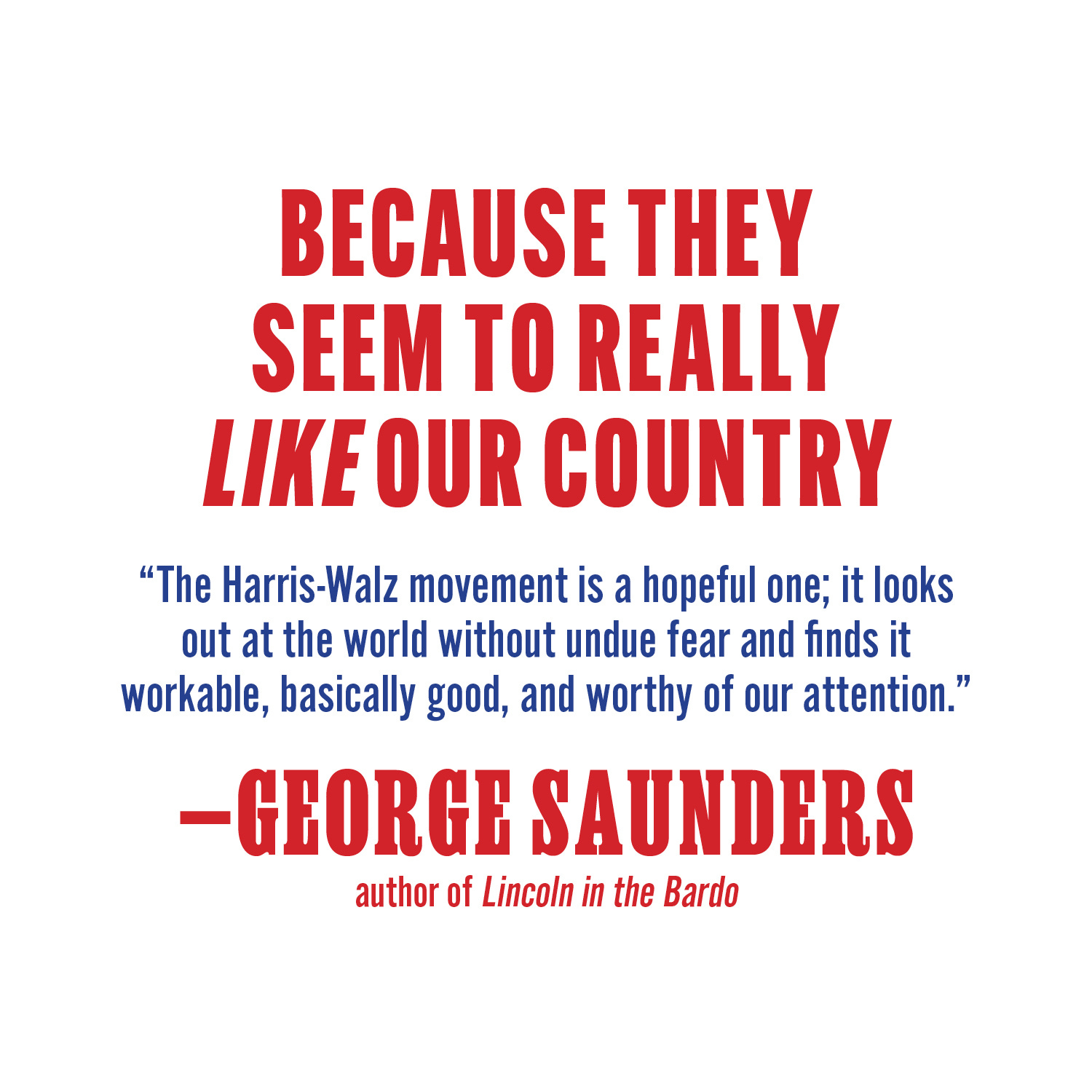
Given that it’s election time, and that this is a very important election – if you DO want to know where I stand, here’s a short essay I wrote for a project that Dave Eggers and McSweeney’s are doing, called 270Reasons.
A bit off topic for today, but ..... I have compiled a draft list of our book suggestions from last week's Office Hours that I'd be happy to share. It's in a word file. Does anyone know if there is a way for me to attach it to a post? Alternatively, could someone please remind me of the contact info for George? Perhaps if I forward it to him, he would kindly distribute it. Thanks!
I am currently teaching a little one-credit, once-a-week class on Orwell's journalism. Last night we spent a bit of time discussing a provocative statement from his essay on Charles Dickens: "All art is propaganda." (A superb essay, incidentally, and one very relevant to a discussion of literature and politics.) Drawing upon a good observation from a student, I suggested that Orwell's statement can operate at two levels. At one level, he might mean that all art is *deliberate* propaganda, created with the conscious intention of driving the reader (viewer, hearer) toward a particular ideological position, preferably without that person's noticing it. I would reject that strong claim. At another level, he might simply mean that all art expresses a kind of worldview, a general attitude or stance toward human life, one that carries certain implications for society and politics. I'm rather sympathetic toward a formulation like that.
My degree is in political theory, and much of my own (modest, since I spend most of my time teaching) research and writing has been in the area we would call "politics and literature." That is, I read a work of literature with an eye for the underlying social, ethical, and political ideas embodied within it, much as I would read a work of political philosophy. (Which is not meant to imply that one should not also read literature in other ways and for other purposes!) I'm not so much looking for work that hits the reader over the head with an obvious "lesson," in a pedantic or polemical way. That attempt usually just doesn't work very well as literature. (I think George is getting at this when he writes here about the need to let a story go its own way, even if it might have begun with an overtly political intention.) But I do think that successful literature generally incarnates a certain outlook on life that it's appropriate to call "political" if we're willing to use that word in a broad sense, as encompassing not just campaigns and elections and talking heads on the news but also more fundamental efforts to grapple with questions of how we live together.