


Out of the Wilderness
Office Hours


Hi everyone.
As you might imagine, my inbox at storyclubwithgeorge@gmail.com, from which I grab these questions for Office Hours, is a big mess.
So, I’m going to ask that, if you’ve sent a question I didn’t get to, and it still has validity for you, will you please send again? I’m going to delete everything that’s in there and start over. Sorry for the trouble.
O.K., here’s our question for this week:

Q.
Dear George and everyone at Story Club,
I am writing to you in the hopes of starting up a conversation about the elusive beginnings of story.
George, the way you have often spoken about your writing and editing process has been extremely helpful for thinking about working with stories that have reached a certain stage of coherence. There is a tone to the advice you offer, regarding line-edits, corralling plots and characters, dutifully encouraging them into their final form- in this conversational, sort of affable coaxing, it seems you can round disparate parts up like sheep. It’s been interesting also to read questions from other writers - who are scientists and psychotherapists and rationalists, who are toting up their word counts and balancing their scales, weighing and carving up the meat of their story.
This has helped to refine the process for the later stages - when I have a lot of raw material, it's all laid out and started to take a shape willingly. I think for me this has felt less scales and balances and more like pattern-making/spotting. But perhaps essentially similar.
The thing is, I don’t always feel in control of the stories. There’s a lack of directing and commissioning a story to do certain things according to authorial will, and usually that’s where my best writing comes from. Especially early on. The rationality of editing, at least the way folks talk about it here, is a mindset that I have to keep at arm's length, to really listen, to bring something strange and energetic, with a will of its own, up from the deep.
One of the difficulties is, this process is hard to wrangle. Should it even be wrangled?
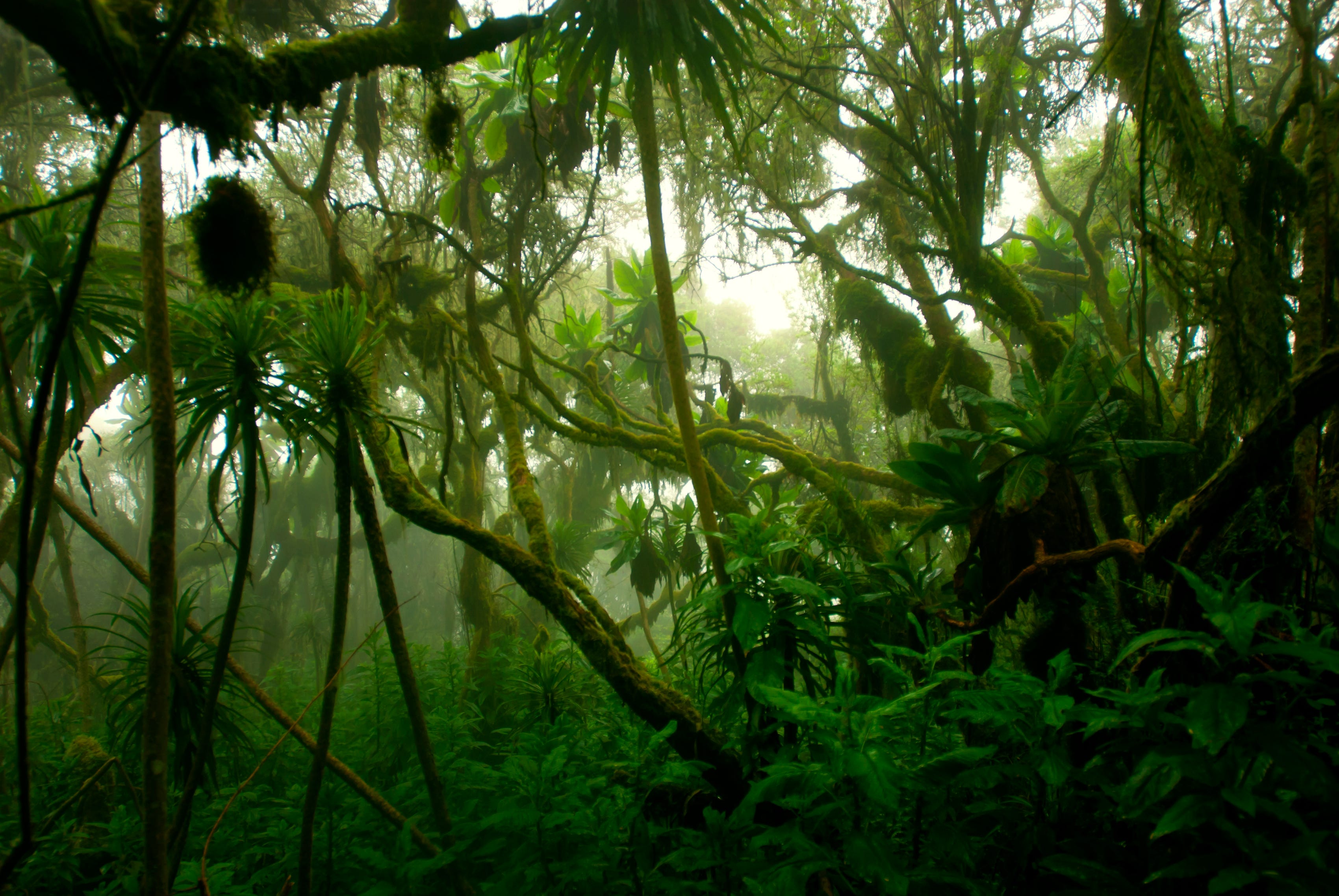
The idea of having raw material to be processed and worked into something useful, is at odds with allowing the wilderness to be wilderness.
I’m piecing together daydream and memory, following the traces of a feeling, stitching together incoherent fragments. Characters and plots form from the scraps of life left behind, the gestures, idiosyncrasies of a lost loved one, half-remembered childhood imaginings, or even pinning down the irritating anomalous details of some everyday interaction- like the making of a spell, eye of newt, lock of hair, baking soda and flour etc.
This mode is very emotional. Maybe some will say too emotional?
These stories have historically taken me to difficult places, sometimes leaked from the cracks of a memory long calcified, broken open in the process of writing. That release is cathartic, amazing, when it goes well it feels like flying. But I care so much, tightening my grip can be lethal. Does anyone else experience this? Does the potency of the initial spark of the story really matter- or does it vary?
So I tend to compartmentalize, keeping civilization separate from wildness. It can be hard to code-switch, or have any fluidity between these modes. I wonder if there is a third way. Editing these stories seems to me more akin to lucid dreaming than logically analyzing and trimming away the fat. It’s so sensitive, and squirrelly. I have to keep my eyes out of focus, sidle up to the story, keep a level of nonchalant detachment.
Maybe it's just time- put it in a drawer and come back in three years will allow the way in for the rational editor. Maybe it’s practice. Or is it all too personal/emotional to be excavated in the first place? Unadvisable to turn your therapy into writing? Does some wilderness need to be left well alone?
I’m wondering if this resonates with you or any of the other Story Clubbers.
All the best, hope to hear your thoughts!
A.
Thank you for this question. First, let me just clarify one small thing, if I might.
You wrote, of your process: “There’s a lack of directing and commissioning a story to do certain things according to authorial will…”
I don’t feel that this should be seen as a problem, at all. I try not to avoid this sort of directing myself. Now, it still happens. (Human nature, I think: we want the result to be good, so we…control). But part of the process is to try to be aware of what I “want” the story is be, and of my efforts to “direct” it, and, at the same time, be skeptical of/push back against that inclination.
It might be analogous to someone with a sweet-tooth. It’s hard to simply never have that impulse but we can be aware of it when it arises and try to work with it skillfully.
For me, a story tells me what it wants to do by way of a swath of prose that works. If something reads well, it is therefore “true.” And it’s “in” (in the story, for now). But I try to stay flexible. If I think I know what should happen next, and I write that, and it doesn’t work – well, then that thing didn’t happen after all.
In the end, the whole story is, of course, what I want it to be. I have “directed” it, I am “controlling” it and to the nth degree. Throughout, I’m tugging at it and encouraging it in certain directions and shaping it into be what I want it to be – which is, however, in a strange way, what it wants to be.
So, I have control over my story, but only after having done a good deal of listening. It’s telling me, in every second, as I re-read it, what it is trying to become, and it’s doing that by being adorable and perfect in this paragraph (which I will then leave alone) and not so adorable or perfect in the next.
So this process is a lot of work that the story and I are doing together.
But, to your larger point, I might propose a sequence of questions:
First: Writing just as you do, do you enjoy the process itself? (It seems, from your question, that you do, very much.)
Second: Do you desire anything beyond that? (The fact that you pose the question tells me that you do. But, if not: no problem, you’re done.)
Third: If you do desire something beyond the pleasure of writing, what is it, precisely? (Publication? To thrill a friend with it?)
Fourth (to that point): Would a reader enjoy it? Has a reader enjoyed it? Have you had anyone else read it and gotten feedback? Have you sent it out to magazines?
Fifth: Are you happy/satisfied with the results of Item Four? (If someone hated it, do you care? Ditto, if someone loved it?)
Sixth: What do you think of it, when you re-read it? (We’d want to discount the very natural fun it always is, somehow, to read something we ourselves have just written – I sometimes will write an email to someone send it, then call it up and read it again, just to bask in the glow of it. Ha, ha, and yet, seriously. There must be some neurological reason for this.)
To sum all this up: there’s no problem at all writing the way you write, and digging it, and moving on to the next thing for the sheer fun of writing/typing/being in the flow BUT if you want your work to communicate with someone else (and if it doesn’t, automatically, when written in that way)….we enter into the realm of Process, or Editing.
Which we might just think of as: What we do to make our work more of what we want it to be, whatever that is.
It’s really valuable, I think, to have had a visceral sense that your work is not communicating, and let that sink in, and resolve to change it.
So, in this sixth step, we are trying to cultivate a mindset wherein we read our text as if we hadn’t read it and hadn’t written it – trying to read it like a first-time reader and, as we go along noting where we love it (where we get that little burst of positive energy) and where we start to not like it (to pull out of it, or resist it, of where we find ourselves energetically and (merely) intellectually defending it, even as we continue not to love it).
If you desire an audience (if you want your work to communicate to/connect with/charm a reader) and if “allowing the wilderness to be wilderness” results in that – bingo, you don’t have to do another thing.
Whereas, if the result of that early wildness befuddles a reader, or frustrates her, or confuses her, or stops her from going on (and, again, if your goal is to communicate with her) then editing begins with…well, with being able to intuit where that resistance might begin for a reader.
How do we do it?
As we’ve discussed here before (and, according to me): We do our best to imitate that first-time reader.
You describe that early part of your process as trying to be able to “to really listen, to bring something strange and energetic, with a will of its own, up from the deep.” That sounds wonderful, just right.
Now, how about using that same mind-state while editing?
That is, you might want to lose the idea of, as you put it, “the rational editor.”
I don’t think editing is that rational at all, when it’s done well.
What we’re doing is looking at a sentence and, by “listening” to it, trying to see if there’s a better version of itself there inside of it (or adjacent to it, or inspired by it). Is there something more “strange and energetic” in there, “with a will of its own” trying to be edited into better form, “up from the deep?”
Here, there’s still (ideally) no “directing” going on, not much overt “rationality” – just preferring.
This is important, I think: the conceptual, directing mind is still being somewhat held at bay during this part of the process.
In my process, there’s no “logically analyzing and trimming away the fat.” No: it’s by sound. Well, sometimes there might be something like analysis, but in the flavor of: “Every time I get to these three long paragraphs, I note a slight aversion: maybe try trimming them down or cutting them altogether?”
And then I just quickly do it.
But that’s not “logical” or “rational,” by my definition…it’s reacting. I’m feeling something, then allowing the quick, concept-light part of my brain to propose a solution.
It’s more like that thing we do when we scrunch around trying to get comfortable on a couch than anything else. (Or like at the optometrist: “Is this better? Or this?”)
Feel, then do.
Many of us writers are Type A people, who want to know before we do. (We want to know where we’re headed. We want to know that this thing is definitely going to work.)
The editing method I’m describing is a little challenging, in that we have to know locally (do I like this or that?) first. We have to trust that those thousands of local micro-decisions will, in time, result in that coherent, organic, thrilling text we dream of writing.
That requires a leap of faith, but it becomes a smaller leap, that we’re able to attempt with less angst, the more times it has worked for us in the past.
For me, now, to be honest, it’s an article of faith that, if I feel this, and correct for it – that’s all I need to do. (Over and over and over, but still.)
Keep feeling (reacting) keep adjusting and, in time, there’ll be a shape there that I recognize, that has meaning and momentum and all of that.
So…I’m receiving, more than directing.
Finally, I don’t necessarily think that it’s “unadvisable to turn your therapy into writing.” Anything can work. Especially if you put it through a rigorous editing process.
At some point, I think (at least for me) the original impetus that got me started on the story will fade away and the story will start to become its own thing, and I’ll find myself wondering: “What is this thing for?” Or: “What is the highest form of this thing?”
I thought I was writing my story to accomplish X; the story turns away and goes off to do Y instead.
There’s a feeling I get at that point; I happily cede control to the story. In a sense, I’ve been waiting for that to happen along; I’ve been hoping that my story would outgrow me.
So, if a story starts with some therapeutic insight or desire: no problem. I don’t think literature exists to serve that end, if you see what I mean. An essay might, or a series of journal entries might, have the goal of improving one as a person, or helping ourselves reach an insight.
Stories, I think, are different. At least I see it that way: a story is trying to send its reader on a thrilling ride and send her out on the other side altered and excited.
It’s interesting, the way that any one of us writes, on a given day, out of a certain model of what writing is and what it should feel like, and all of that. Often, we find that model encoded in questions we ask about writing. Here, it seems to me that our dear questioner has an idea of what editing should be (directing, rational) and is about to enter a new space, where her editing will feel very different – freer, more intuitive and playful.
Thoughts, Story Club?
Hi, George and fellow SC members--and hello, of course, to A.
A., I want to say first that, if your fiction is anything like your letter to George, I would happily read any story you wrote. The serious play of metaphor--editing is like rounding up sheep, like balancing scales, like carving the meat of the story--what wonderful work you are doing right there.
It is also certain that those shepherds, those accountants and merry butchers you conjure up so vividly, were in your position before, and might very well be again--in fact, I'm there now, with a long story I've had on my hard drive forever. And isn't the corollary true? It seems that some day you are likely to be one of those skillful shepherds yourself.
Here are strategies that have helped me--and maybe you've tried them, too:
a) Hear how it sounds. Read it aloud, have a friend read it to you, have an app on your computer read it. Does it work, does it play? Do you hear things--patterns of images, interesting rhythms on the one hand, rough passages to smooth on the other?
b) It seems that the raw material you're working with is _very_ raw: emotionally fraught, deeply meaningful. To give yourself some distance, try writing a scene or even the entire story from the point of view of another character. Or change the narrative voice. Or change the location or sequence of scenes.
These tactics might help you more clearly appraise not just what the original draft needs but what it has _become_ and can help you be (to use George's terms) not a "director" but a "receiver."
George, as SC was reading "Ivan Ilyich," I was also reading A Swim in the Pond in the Rain. Your discussion of Turgenev's "The Singers" (if I recall correctly) acknowledged that the story seems--is--digressive and full of detail, but cumulatively what might initially strike us as irrelevant (like the energetic sparrows and dolorous crows) are part of a pattern--oppositions and complements that shape our understanding of the characters' songs, of the (very different) art they make, and, ultimately, of the role that art plays in our lives.
So I love the advice to listen to the story, to find ways to see where it takes you, before you worry too much about herding the sheep, counting the words, weighing the meat.
Excellent advice for writers at many stages of life.
Re: "[E]diting begins with…well, with being able to intuit where that resistance might begin for a reader." It also begins with being able to intuit where that resistance begins in the writer. For over 10 years I fulminated that I couldn't get an audience for my "difficult" work, which editors hated, and it turned out that I, not the editing, was the problem. In fact, I was just really, really terrified of the intimacy of having readers and being understood by others. It is really humbling to have to admit you played yourself and self-sabotaged, but I think many writers who are at this "huh?" stage and calling it their personal wilderness just have to trust they'll get out of their spiritual wilderness in some uncontrollable segment of time.