
Going Still. Still Going.
And: Why a Writer Must Dictate Event (According to Me). (Another post that, though baggy, is full of love.)


Hi everyone,
Got the news yesterday that Vigil is debuting at #1(!) on the The New York Times best sellers list.
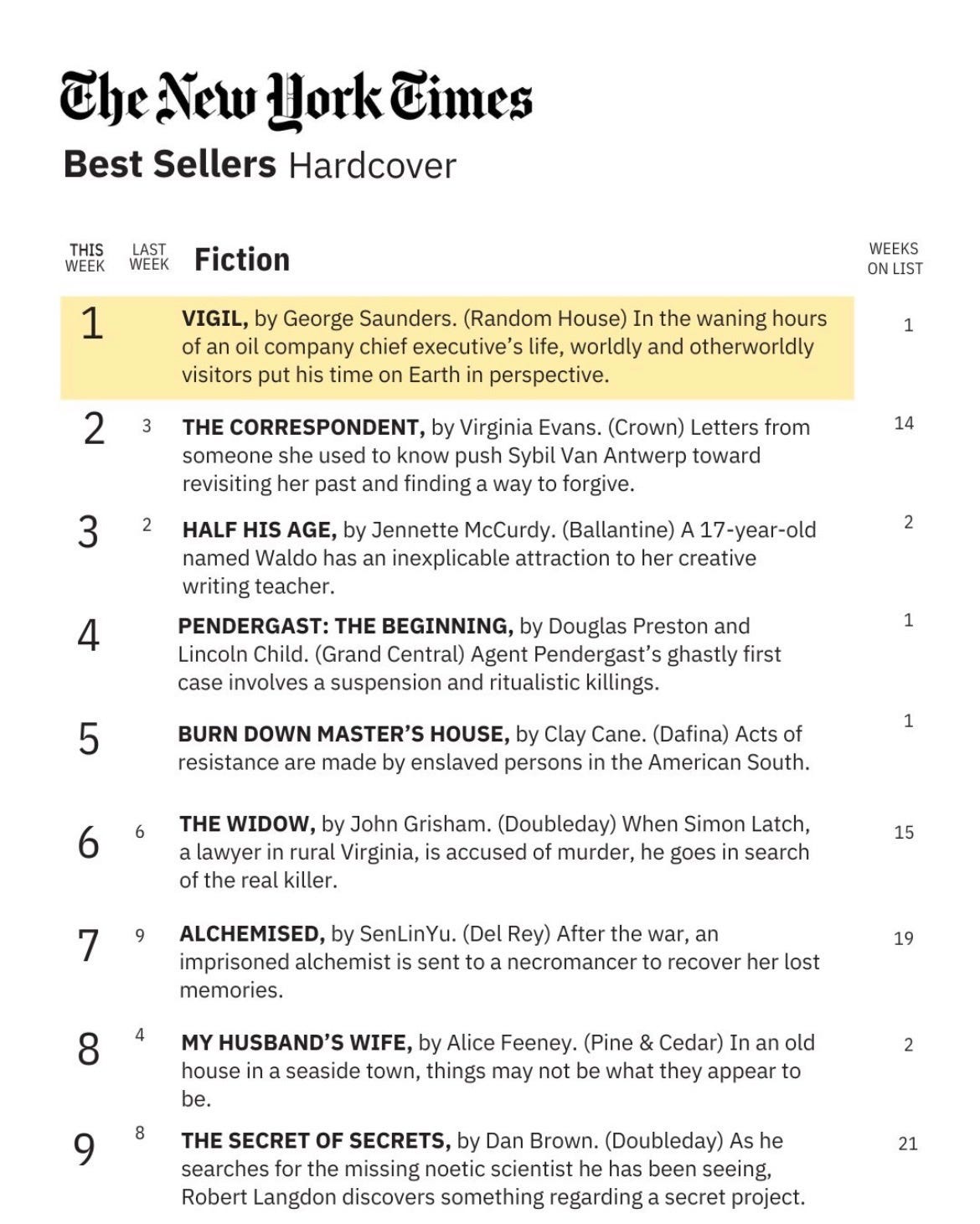
Thanks to all of you who helped this happen, by pre-ordering or otherwise buying it. What a thrill. Jeez. I mean. :)

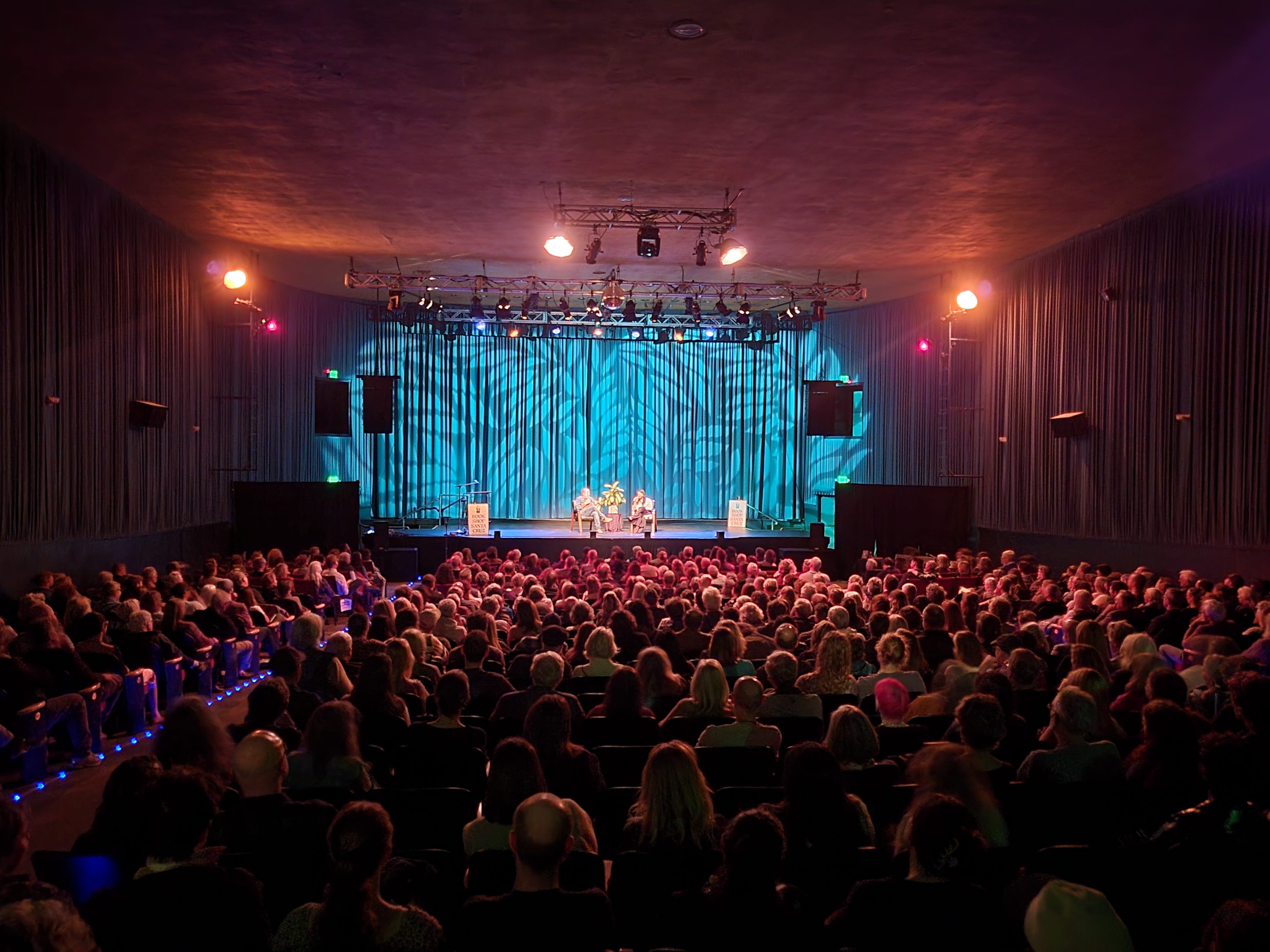
I’m writing this little intro on a flight from Los Angeles to Vancouver. Since I last wrote, I’ve had events in San Francisco, Santa Cruz, and Los Angeles – I’ve dropped in some photos at the end of this post. You’ll also find a compendium of some of the podcasts I’ve been doing.
After Vancouver, I have a day off at home, and then it’s off to Chicago, Madison, St. Louis, Baltimore and a short visit with my parents in New Orleans, then over to the U.K., then another short visit home…and then Dallas, Austin, Houston, and San Diego. 😊
Then (early March!) done for a bit.
For today, because I’m still racing around, I thought we’d do one more beat on “Victory Lap,” in response to a question that came in over email, a version of which was also asked at the L.A. event:
Q.
Dear George,
I have a follow-up question on your post discussing the ending of Victory Lap.
(The question continues after that short commercial break…):
For what it’s worth, my interpretation of the ending was the same as your “correct” interpretation. However, it makes me think of the whole “death of the author” argument, and where the line between a misread and alternate read is. So in this case for example, it still seems like the “other side” - that Alison’s parents essentially created a happier version to help their daughter cope, and they’ve so thoroughly drilled this that she now believes it herself - is viable given what’s actually in the text. And crucially not just viable, (an alien came and wiped their memories off-page may be “viable,” but it’s outlandish and silly), but believable given the characters, and what it might mean for what the story is trying to say.
I wonder (and please bear with what might sound like woo) if part of why the original ending felt off to you, was that it erased this ambiguity, and that on some level, there being this kind of ambiguity actually led to the feeling of “this works now.” That is, if you really wanted no ambiguity, it would’ve been easy. But now not only does the story achieve the goal of “raising the question,” rather than “answering it,” it actually has different “questions” it raises depending on your reading. And it seems clear that wasn’t a conscious choice, but I wonder if that wormed its way into your instinctive preference.
But, then, maybe not! To which there is maybe a broader question, putting aside actual mistaken readings (e.g. Kyle is 50 years old), is it the author’s job to correct what they consider misreads?
A.
Dear Questioner,
Right – so, to answer this, let me start with what, for me, is an article of faith: the writer has to know what happened. (Or, as Isaac Babel put it: “You must know everything.”)
If we think of a story as a self-reflective system, every part in intelligent relation to every other part (even if lightly, even if casually) – well, this would be hard to achieve if the writer was iffy or undecided on a critical event within it.
So, I had to decide (or, more accurately, had to “find out”) whether Kyle had killed that guy at the end or he hadn’t. It had to be one or the other.
The meanings of the “Kyle Killed Him” ending and the “Kyle Didn’t” are wildly divergent. And each ending would need to have had, if you will, a slightly different story preceding it, in order to work.
We see Alison in the kitchen, looking out the window. She whispers, “Kyle don’t.”
And he doesn’t (as we will soon find out).
On what was that decision based? Here’s my after-the-fact rationale:
If we go with the “Kyle Kills Him” ending, the larger story becomes more tragic (Kyle is a murderer)– which is fine by me – but there’s also an imbalance there, in that Alison’s influence gets negated: she is out of the story as soon as she whispers that phrase. I think a reader really comes to feel fond of her in that early section and the story is weirdly shaped, if she just vanishes (it also becomes Boy Saves Girl, which, while, of course possible…well, I felt something deeper might appear.) The move of having her step outside and assert herself by shouting out “like a champ” to Kyle closes the loop for both of them: she is finally a realist, and he is finally getting (and taking) sound counsel, from someone who is genuinely trying to help him. It also fixes that balance problem – she has been very important to the early part of the story, and has faded out a bit, and the story has a better shape if she plays a vital role here at the end.
It felt to me like a more complete, shapely story if both kids performed that “saving” function for one another and, based on that, and the fact that there would be a certain gratuitous cruelty in a story that was already pretty harsh, I decided that Kyle, did not, for sure, kill the guy.
What might be interesting is that whole last beat of the story only arrived while Deborah Treisman and I were wildly editing. I can’t remember how it ended when I sold it to the magazine but I think it might have been in the version I mentioned last time – with Kyle talking to his parents.
Anyway, when the story was done, I “knew” that all of the above was what really happened.
If I hadn’t known that – if I’d left it up to the reader – I wouldn’t have been doing my job. (It’s like a musician who isn’t sure what the last chord in his song is.)
There are some things, of course, the writer doesn’t know, and doesn’t need to, necessarily, and he trusts the reader to supply these things, based on the rest of the story (a character’s hair color say, or what a certain character was doing while offstage) – but my view is that the main events have to be discovered by the writer and he has to take full responsibility for them – he has to be very clear on what happened and what didn’t.
The reader is free to take whatever meaning she likes from that – but I don’t think it’s her job to decide what happened and what didn’t. There’s sometimes room to speculate about motivation – why a person did a certain thing – but we have to be clear on the factual events of the story.
Even if, as in this story, the writer might be a little sly (subtle! artful!) about the way in which he provides those events.
We know, for example, that Gatsby is dead at the end, that Scrooge buys a turkey, that the train kills Anna Karenina. There’s no doubt about those things.
We might feel that the death, the turkey-purchase, and the suicide “say” different things about the respective meanings of those works, but in order for us to construct that interpretation, we have to grasp a clear succession of events.
The questioner says, “It still seems like the “other side” - that Alison’s parents essentially created a happier version to help their daughter cope, and they’ve so thoroughly drilled this in that she now believes it herself - is viable given what’s actually in the text.”
I mean, there’s nothing in the text that directly contradicts this reading, I guess, but there’s also (importantly) nothing that supports it. If I had intended this, I would have woven in some subtle signal to the reader who was investigating this notion. That would be part of the communicative art of the story.
You know:
“You did beautiful,” Mom said, and gave Dad a look, a slight wince, and Alison wondered what this meant” – something like that; a way of waving over Alison’s head to signal to the reader that that little doubt beginning to percolate in the reader’s mind has validity.
But I’d argue that nothing in the story has made us believe that her parents might do something so extreme.
If a writer wishes the reader to sense and then believe in a non-normative interpretation (Gatsby was faking his own death, so he could go somewhere and start anew, for example) then there would need to be, in the text, some confirmatory evidence of this (“Many years later, Daisy could have sworn she saw Gatsby, or someone who looked remarkably like Gatsby, in Chicago. She remembered the way he used to always dream of starting over….”), but that notion would also need to have been baked in earlier, and also suggested all along the way – maybe Gatsby would have proposed such a plan, or she would have found a train ticket dated for the day after the death.
But even this unravels, when we ask how he could have predicted that the gas station owner would have killed him on that day…(unless, of course, they were in cahoots!)
There’s a sort of Occam’s Razor sensibility at work: the reader should accept the simplest version of events. Then, she holds the rest of the book up against that interpretation, for pleasurable reinforcements of it.
With “Victory Lap,” there’s a larger issue, which is simply that if Kyle really did bring the rock down on the guy’s head, everyone would know – Kyle would likely have been arrested, or at least questioned, and would eventually have gone back to school, so the idea of her parents shielding her in that way seems to me both hapless and, eventually, cruel.
Also, we know, factually, that she was standing at the window when Kyle raised the rock. And, in the version where Kyle kills the guy, she would have seen that murder – there’s no way around it – since it would have happened seconds later. And no amount of late-night reassurance from her parents would convince her that that was a dream.
Finally – the occasion for that parental talk is that Allison has had a dream and was upset and they rush in to reassure her. That is, they are not trying to rewrite reality, but to re-establish it – to pull her all the way out of this reoccurring dream. And, from what they say, they seem to know the content of that dream.
Anyway, that’s what I think. In my aesthetic system, the meaning of a story comes from the events and from the character’s reactions to those events, which we glean, in part, in addition, from voice – the ways in which they think about and react to those events.
But the events are the bedrock.
And they are for us, we writers, to decide. :)
When I think about why I chose to confirm that particular event in the (perhaps subtle/elusive/indirect) way that I did, there are really two reasons. The first is subtlety. I didn’t want to narrate Kyle’s dropping of the rock in real-time, in part because…I found (by trying) that I couldn’t do it in convincing way. There would have been, let’s call it, an unsupported beat: “Kyle lifted the rock over his head, then put it down.” What caused that? Nothing, or else something internal to Kyle that, because we’re in Alison’s POV, we aren’t privy too – so, this would have been unsatisfying and wouldn’t have expanded the meaning of the story. (And the reader wouldn’t have bought it – I know this because I tried it.)
Whereas, to delay there a bit and have one of the kids have a bad dream, and have their parents come in – that provides just a little suspense before the reader finds out what Kyle did. And, continuing in this mode…to show Kyle’s parents talking to him (which, as mentioned above, I also tried) would have, perhaps to neatly, closed out the question, “Does this experience change Kyle’s claustrophobic home life?”
When, in those last rounds of edits, I changed it so that we stayed in Allison’s point-of-view, there at the window, I didn’t know what I was looking for. And found two things: one, a way to narrate those last moments in the yard that felt convincing – that is, as she recollects it under he parents’ urging. Two, and more importantly, I discovered this idea that, though they lived through a tragedy, it could have been worse, and that it wasn’t worse because of their mutual bravery.
That, it seems to me, is the deeper meaning of the story – these two kids, both impeded in their own ways, being forced, by this pressure-cooker of a traumatic day, up to a higher level of selfhood.
This all leads me to think of Vigil which, of course, I’m talking about a lot these days, and I’m hearing other people’s interpretations of it. One thing that has made me happy is that, although I think the facts of the novel are clear, people are taking different things away from it, and, in this, the book is fulfilling my vision of it, as an example of that Chekhovian idea that a work of art has to make a field of argument, so to speak – not solve a problem, but formulate it with clarity and, maybe, uplift it into a zone where “answering” seems irrelevant.
(Speaking of which, I did a recent podcast (versions of which can be found here, and here_with the brilliant Tess Callahan (whose Substack Writers at the Well I highly recommend). Tess has also published this (I have to say) stunning essay on Vigil in Electric Literature in which she seems to have crawled right inside my creative mind. Thank you, Tess.)
Maybe we could, as a group, brainstorm some other endings that might be read in different ways. Any examples from literature or from your own work?
Now, with your indulgence, some tour updates.
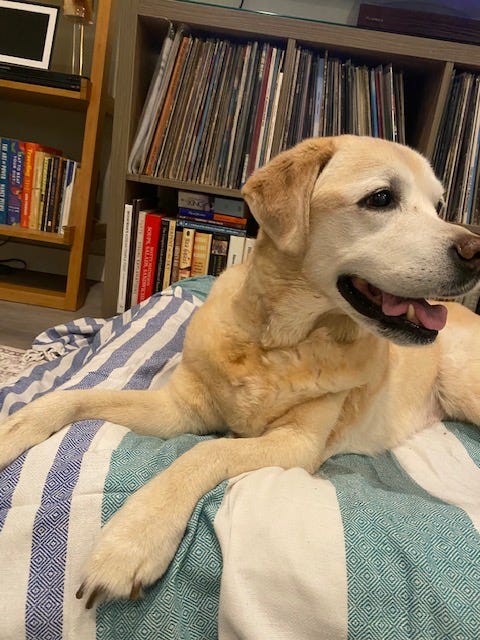
Guin, dear Guin, is thriving in my absence:
Though the Nashville event was canceled because of the ice storm, I got to spend some time with one of my heroes in life and writing, Ann Patchett, and we recorded this talk:
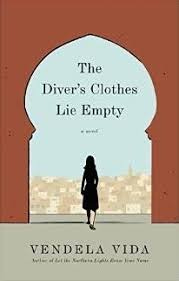
I was interviewed on-stage in San Francisco by the wonderful Vendela Vida, whose books, including the recent The Diver’s Clothes Lie Empty, are beautiful lessons in pacing and urgency. Thank you, Vendela, for the acuity of your questions and the powerful blessing of your generous, gentle presence. (More S.F. photos coming soon.)
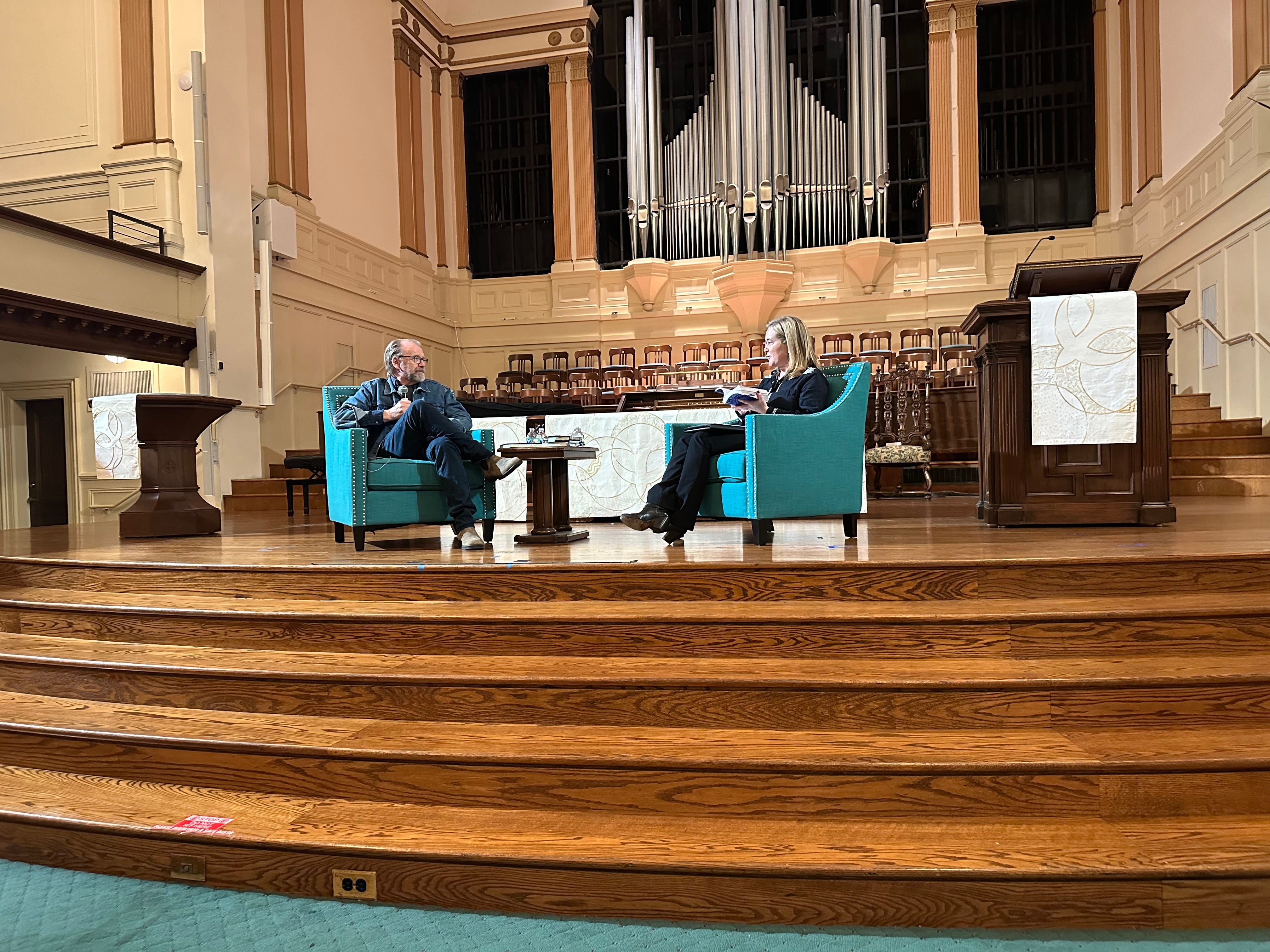
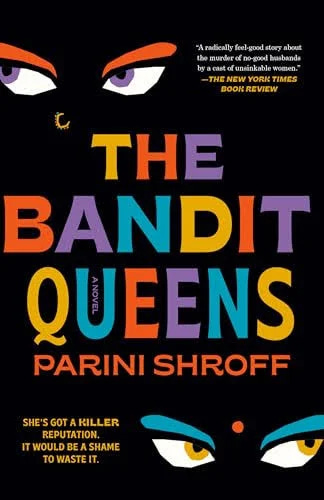
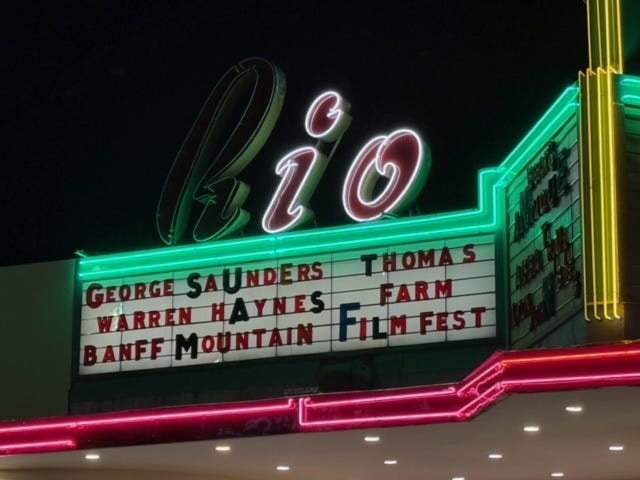
In Santa Cruz, I was interviewed so graciously by Parini Shroff, author of The Bandit Queens, at the venerable Rio Theater. Thank you, Parini, for your kindness and good humor - what a pleasure.
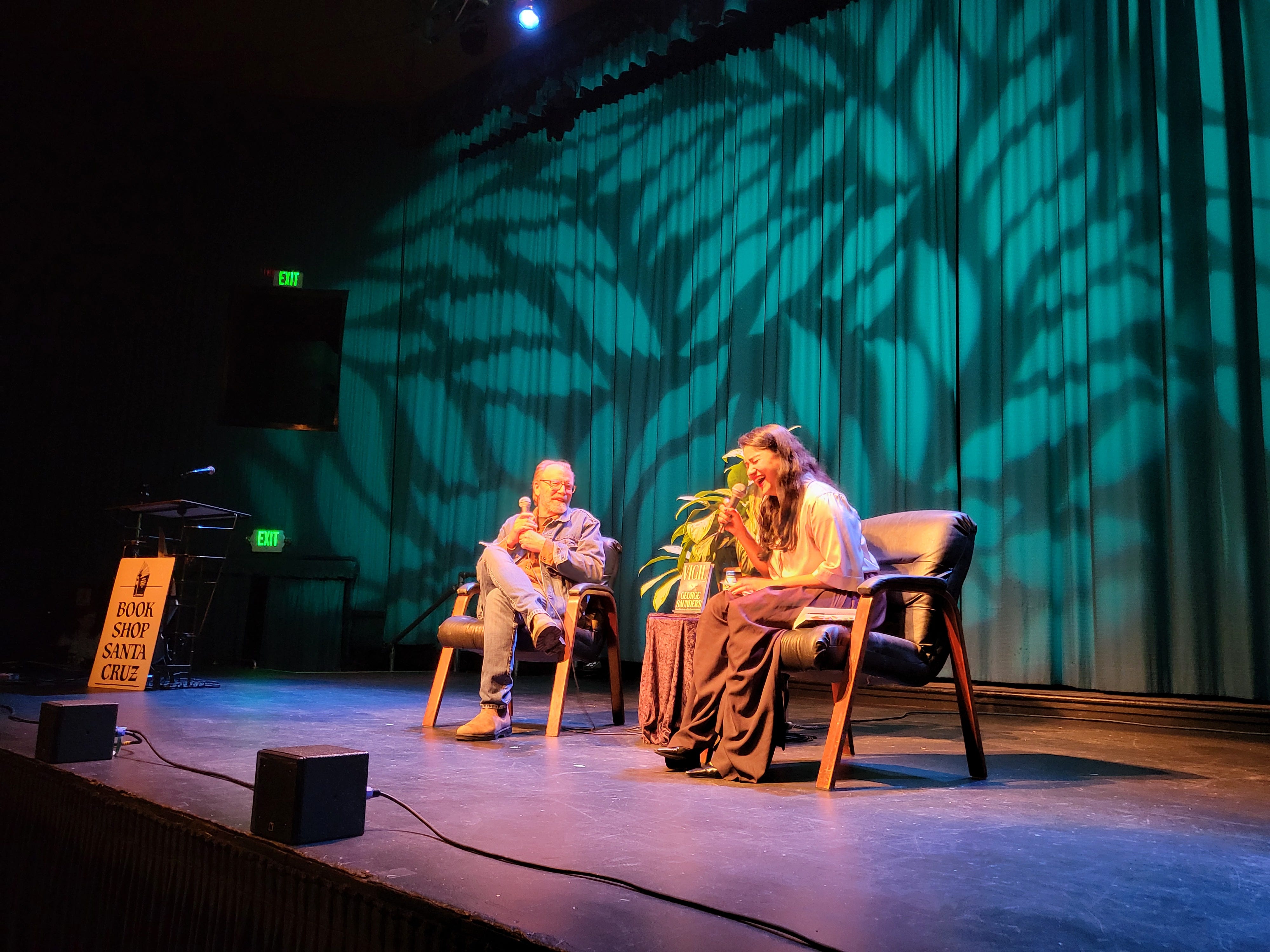
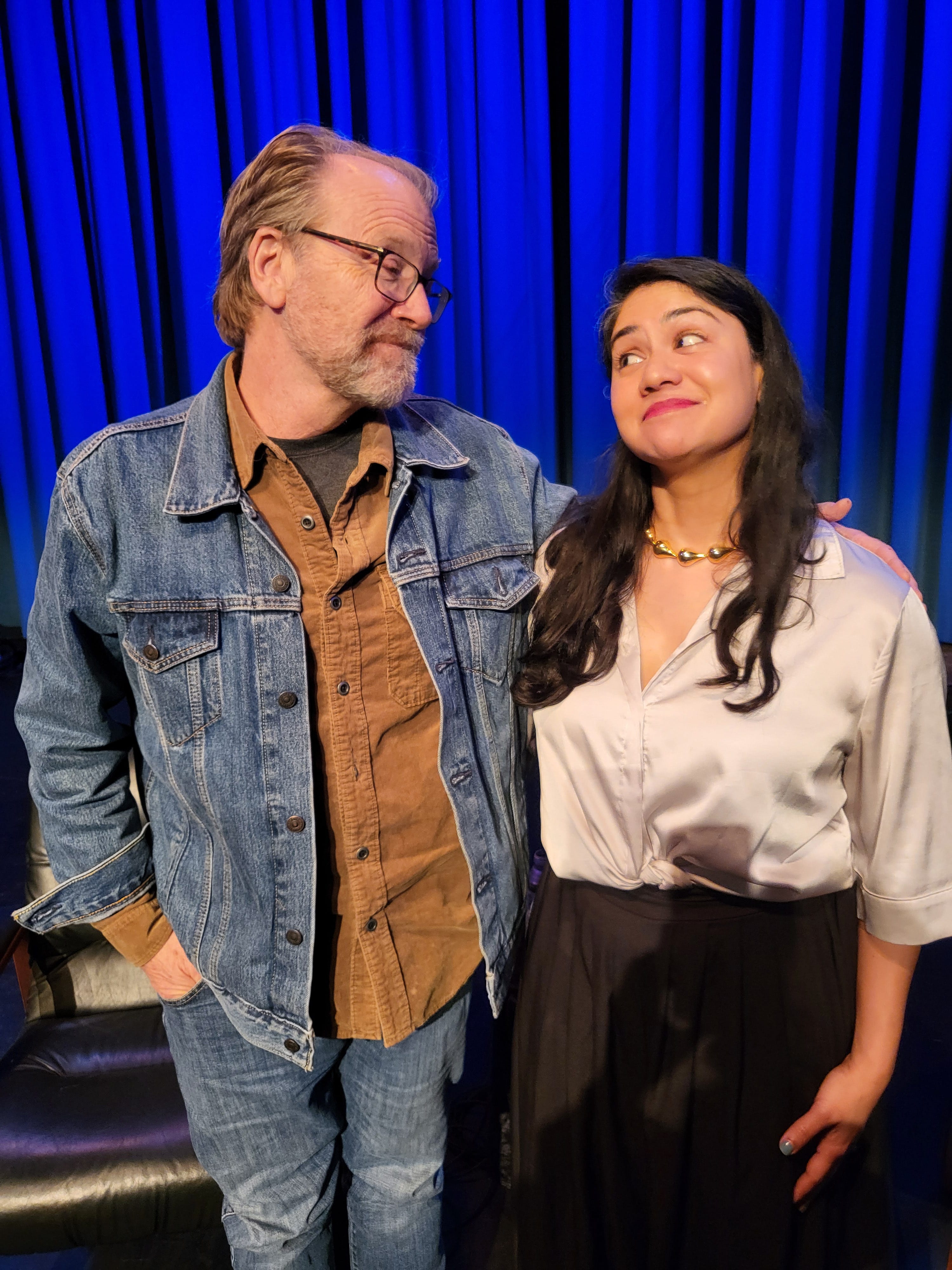
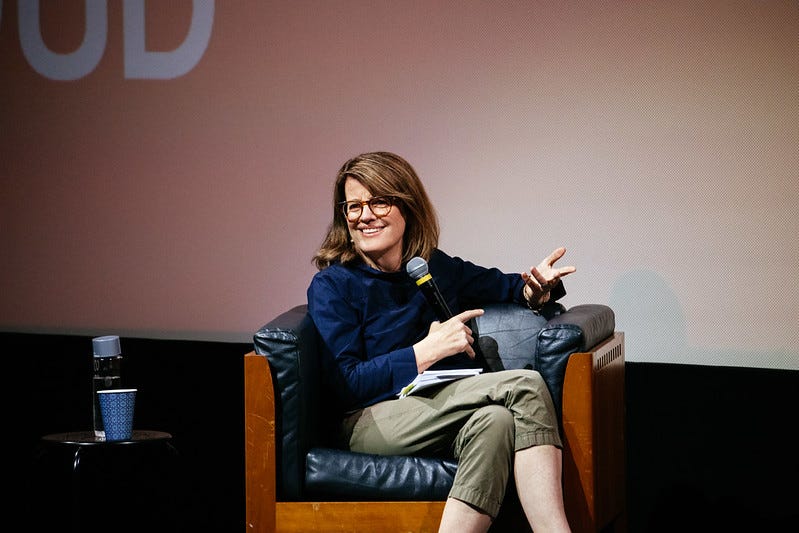
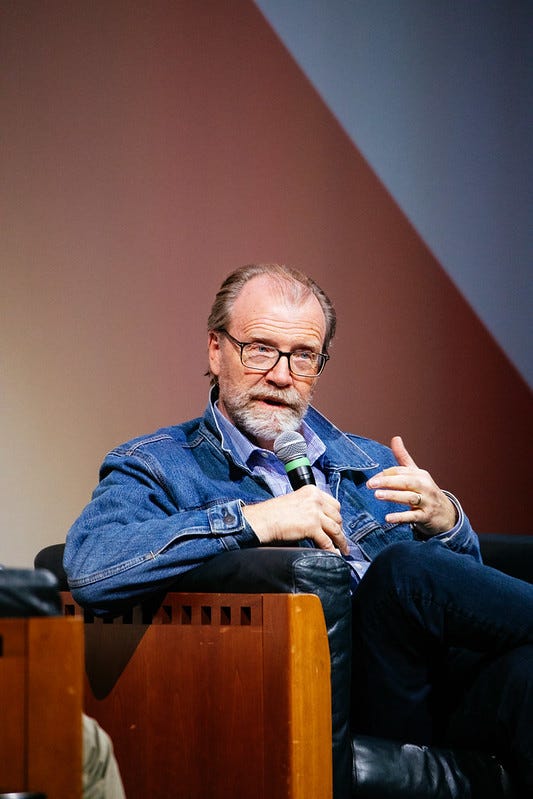
I had a crazily enjoyable night in Los Angeles, onstage with the wondrous Kelly Corrigan. I was recently on Kelly’s podcast:
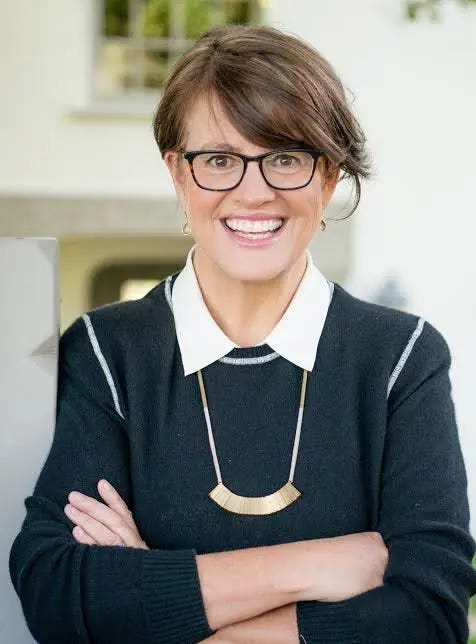
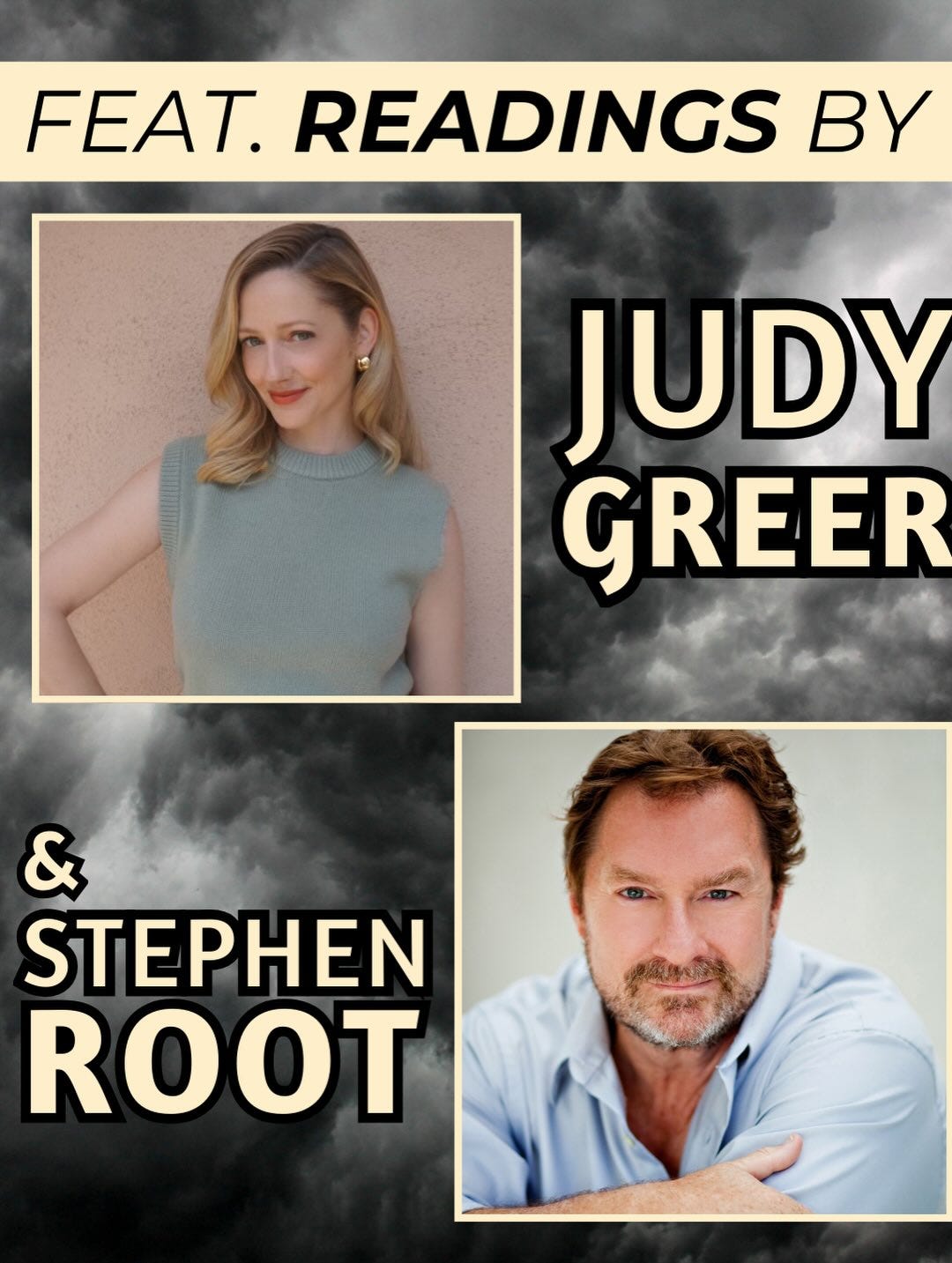
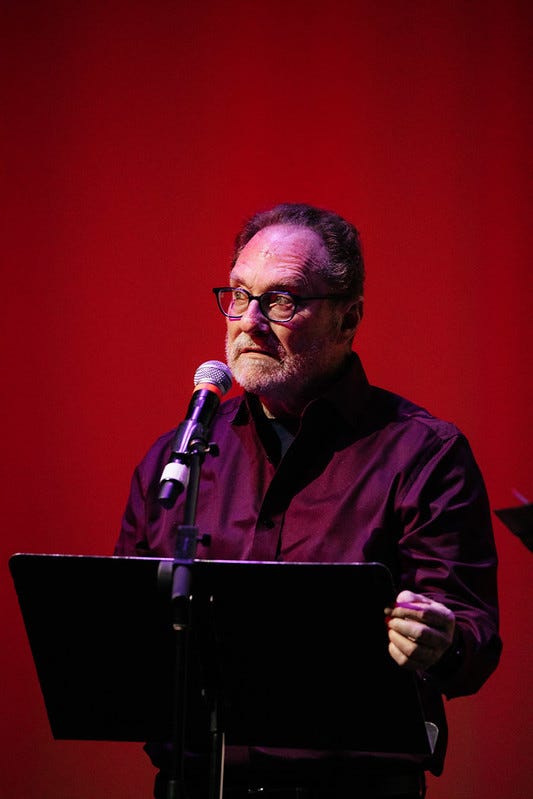
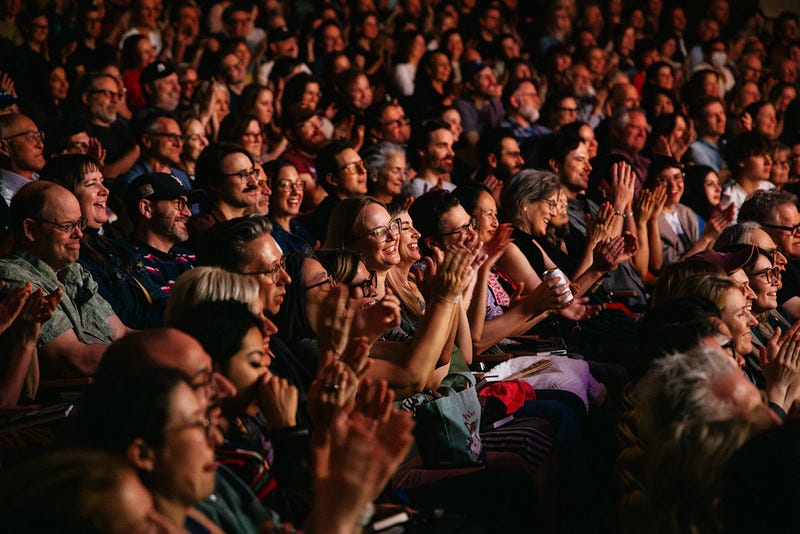
…and had a great time on stage together - she is such a funny, charming, intelligent, and natural conversation partner, whose deep soul shines through. I heard so many people afterwards discussing the particular genius of the way Kelly interviews. The event began with a reading by Judy Greer and Stephen Root, who nailed it, to the delight of the audience (and me). They also nailed it in the audiobook, which Kirkus awarded their Earphones Award Winner (the equivalent of a starred review):
This atmospheric, otherworldly, splendidly performed novel has a serious premise: the cost of greed. K.J. Boone, a rapacious oilman at the end of his life, is visited by ghosts. The three main narrators are splendid. Judy Greer, as the youthful Jill “Doll” Blaine, the wraith tasked with Boone’s exit, plays the role with empathy, remarkable pace, and just the right tone. MacLeod Andrews performs the Frenchman, the unforgiving second ghost, more broadly but persuasively. Stephen Root captures the onetime oil baron’s unrepentant attitude. Root characterizes him as a man who never questions himself but knows that others do. Cameos from other standout narrators—Mark Bramhall, Cassandra Campbell, Rebecca Lowman, and Saunders himself—add to the experience. This brief and brilliant audiobook is compelling and wildly imaginative.
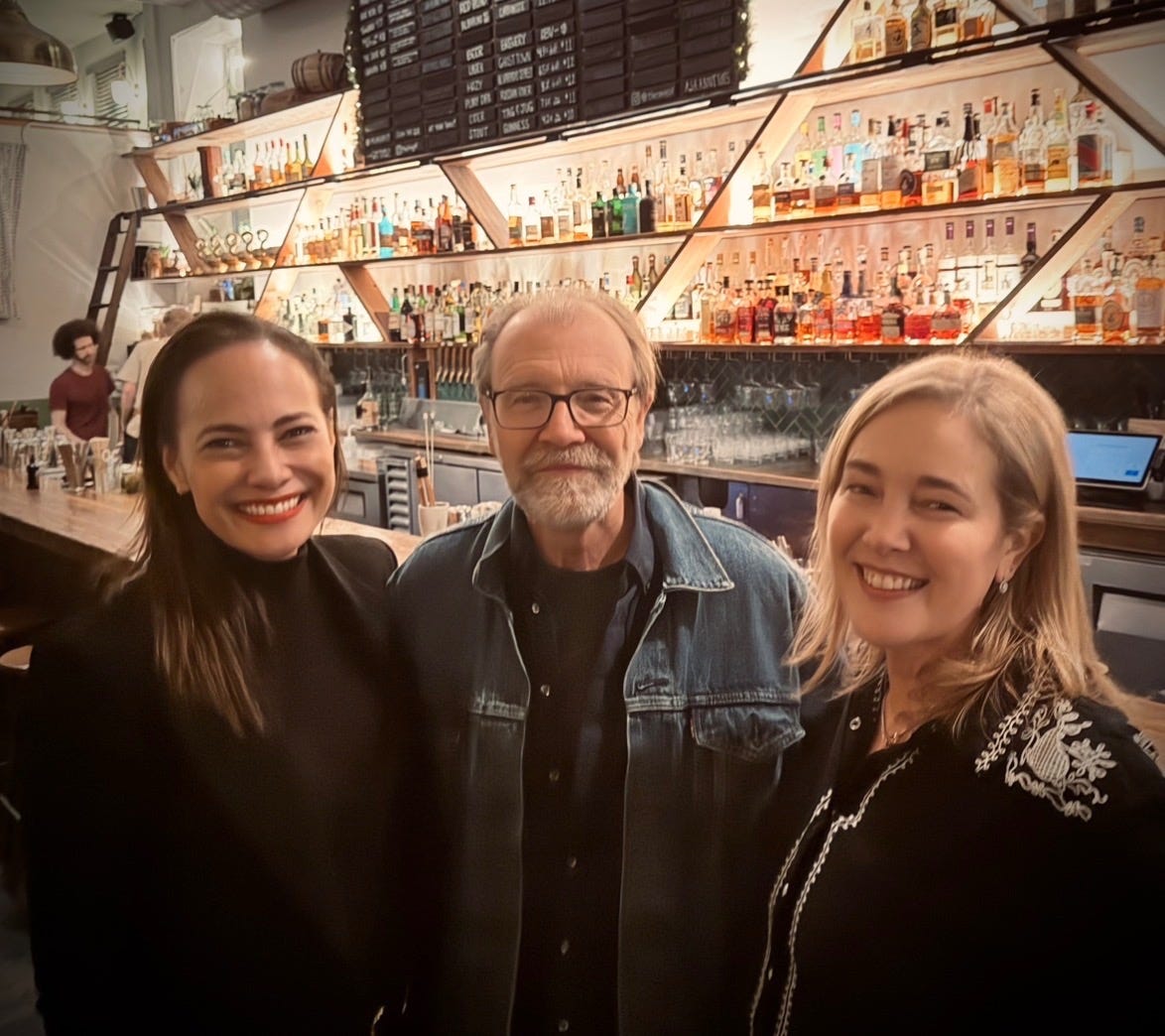
First, here are two photos from L.A. - of me and our beloved Mary G.
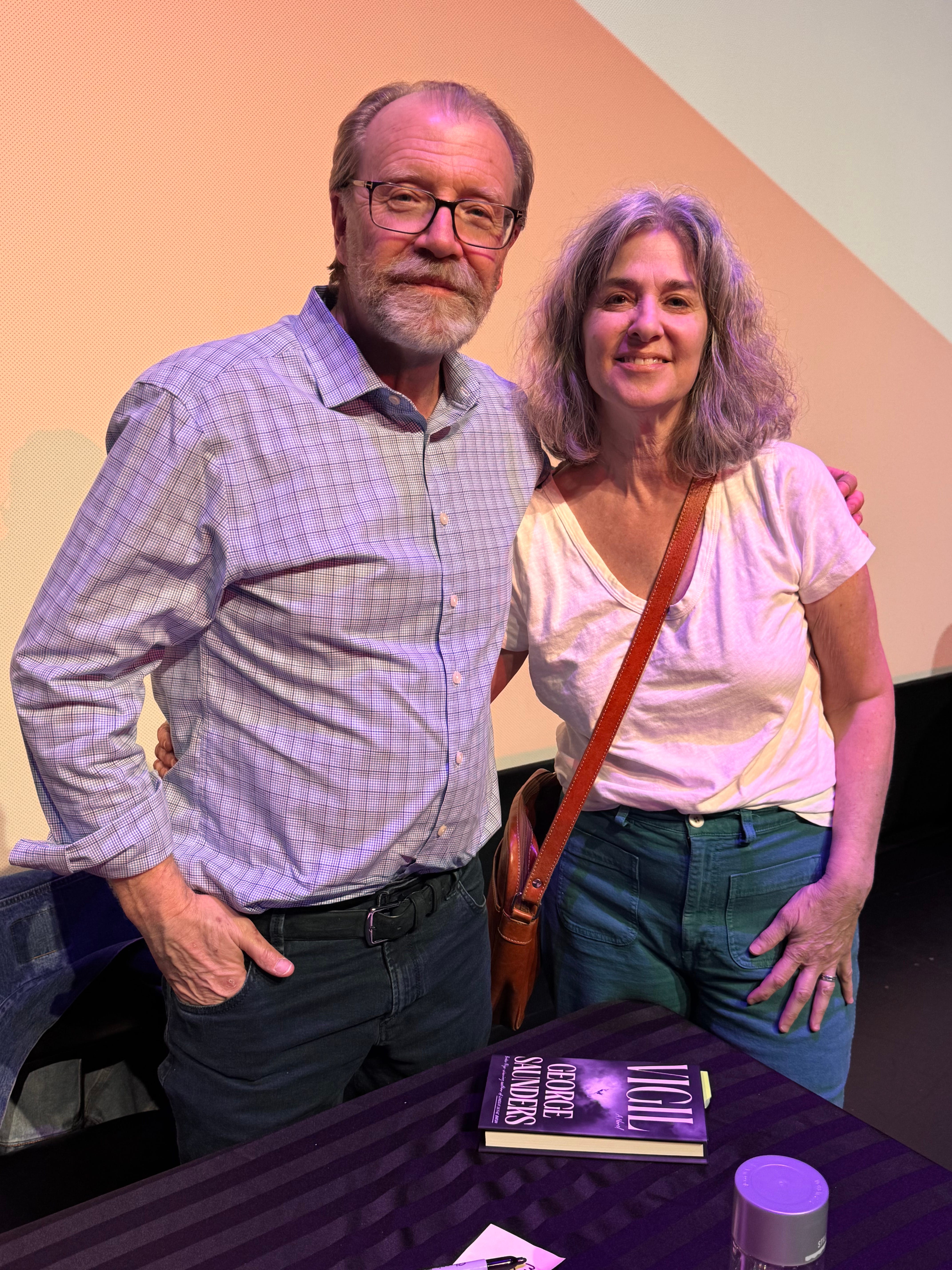
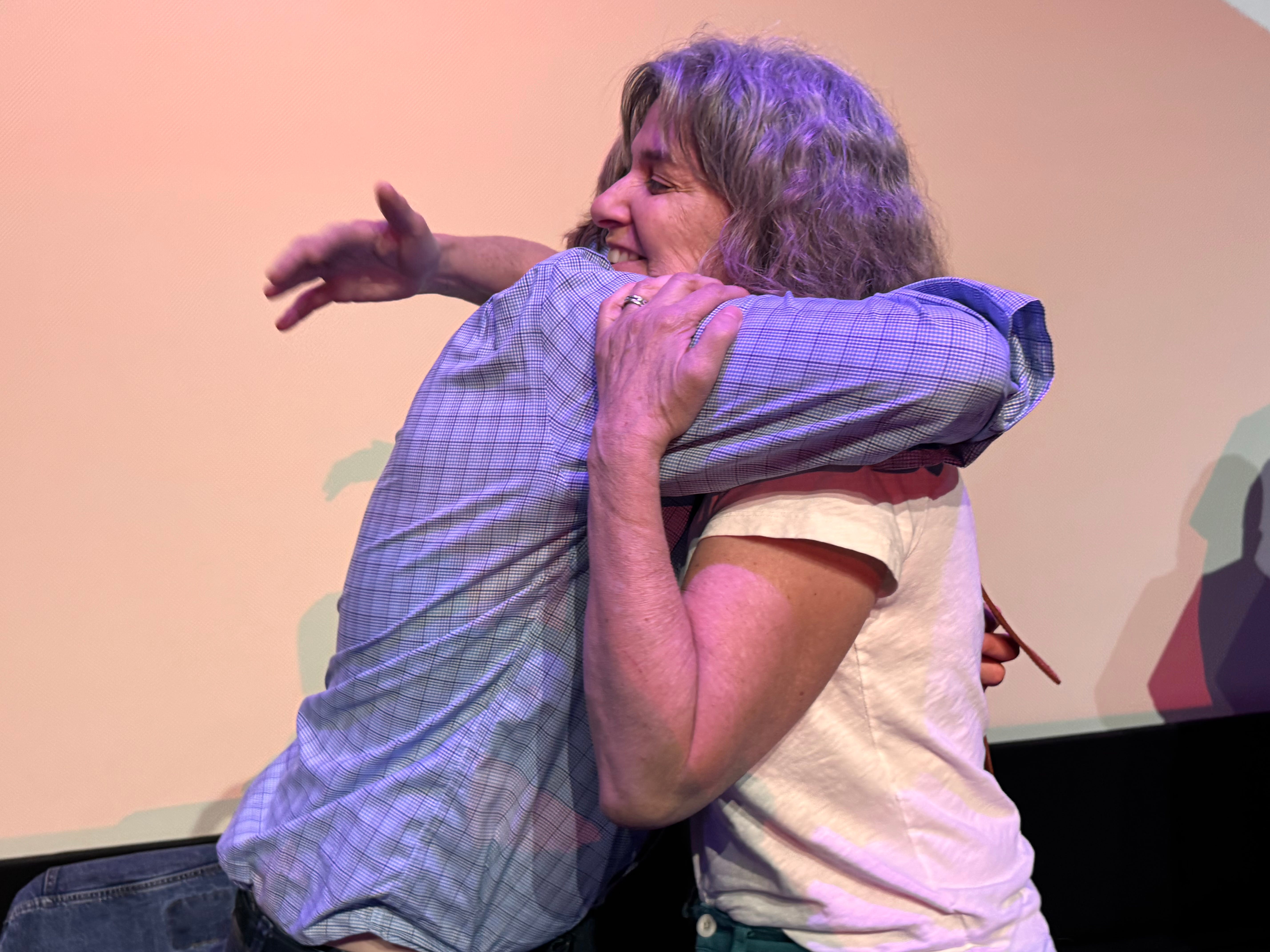
All of the following are by Anthony Tran, with permission.
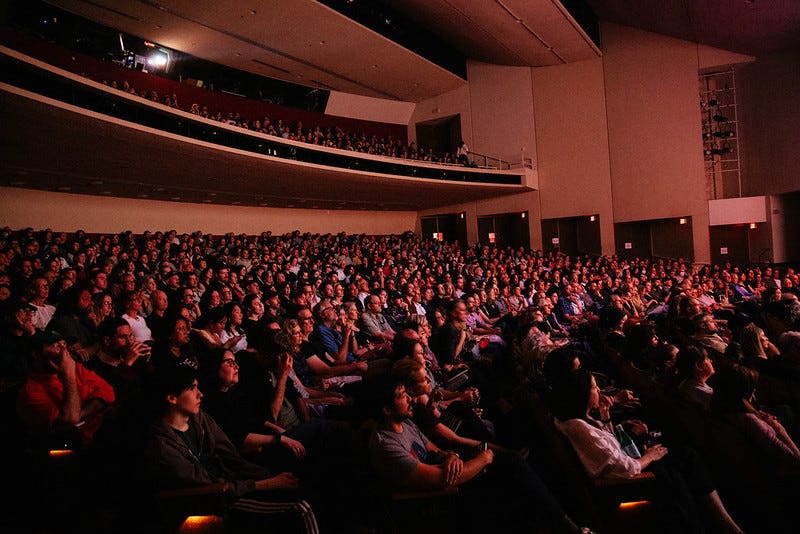
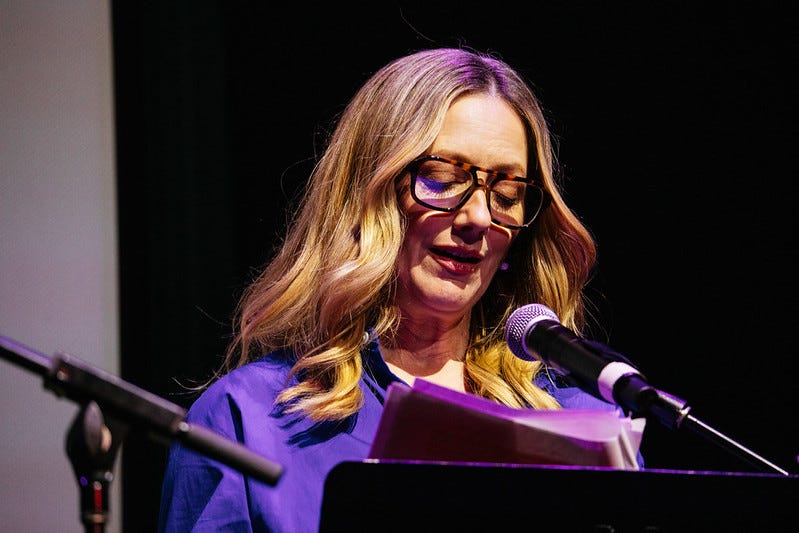
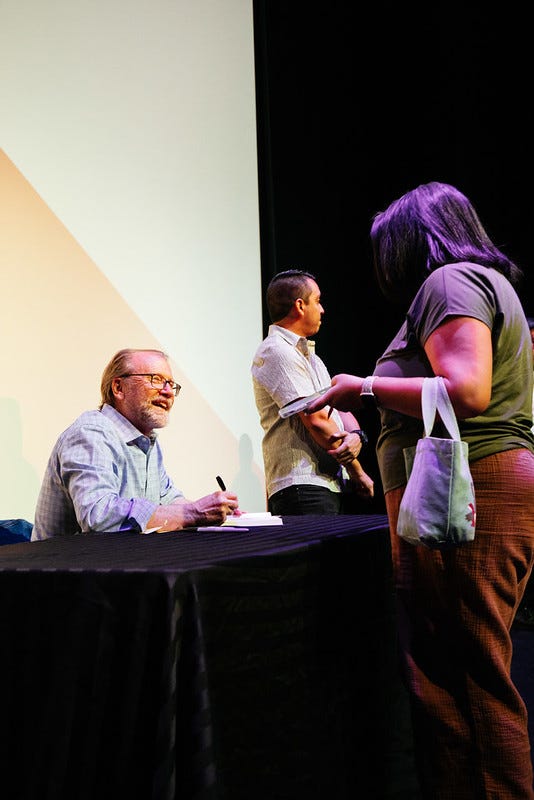
Thanks so much to all of you who’ve come to the events and will yet come to one, or think about coming and decide not to, but later maybe, slightly, regret it.
I am so grateful for all of you.
Ah, so today is a day of mysteries revealed....clarity on the ending of Victory Lap...and photos of MaryG, our power commenter and community supporter. So cool. All of it. Plus Guin! And congratulations on Vigil's success. I bought it (3 times), read it, and felt like an insider the whole time. What a privilege. Thank you George, as always, for your generosity and insight, which does not seem to flag no matter how busy you get. And thank you for setting the supportive tone in Story Club that makes it one of the best places on the web. I highly encourage people who are now discovering Story Club to subscribe, per George's 'commercial break'. Go for the whole enchilada, the full George (marginally related to the full monty). I jumped all the way in many years ago and it has turned out to be so much more valuable than a substack about reading and writing. This is a graduate seminar on approaching life and self expression with curiosity and empathy, for others, ourselves, and the characters we create. It's about connection.
BTW - count me in the group that wanted to see you live, bought tickets and still missed it. And regrets it…
Congrats on the NYT #1! And Thanks for all the great links! And for the mary g. photos.